Knowledge Hub
What pool owners in the UAE need to know.
Practical explanations of pool problems, equipment, construction and water quality, written for UAE conditions. Every entry names its sources and the date it was last checked.
Topics
26 entries
- Pool problemsWater loss, leaks, damaged tiles and faulty equipment: what the signs usually mean and when to call a specialist.5 entries
- Pool maintenanceRoutine care in UAE conditions: heat, dust, holidays and what a maintenance contract should cover.3 entries
- Pool construction and renovationHow pools are built, how finishes and waterproofing age, and when resurfacing or a full renovation makes sense.6 entries
- Pool equipmentPumps, filters, chillers, heat pumps, lights and controls: how they work, how they fail and who services them.4 entries
- Water quality and chemistryClear, safe water: what turns it green or cloudy, how chlorination and salt systems work, and which values matter.2 entries
- Dubai and UAE pool guideLocal rules, safety, hiring a contractor, buying or renting a villa with a pool: practical knowledge for the UAE.6 entries
Recently reviewed
Checklist
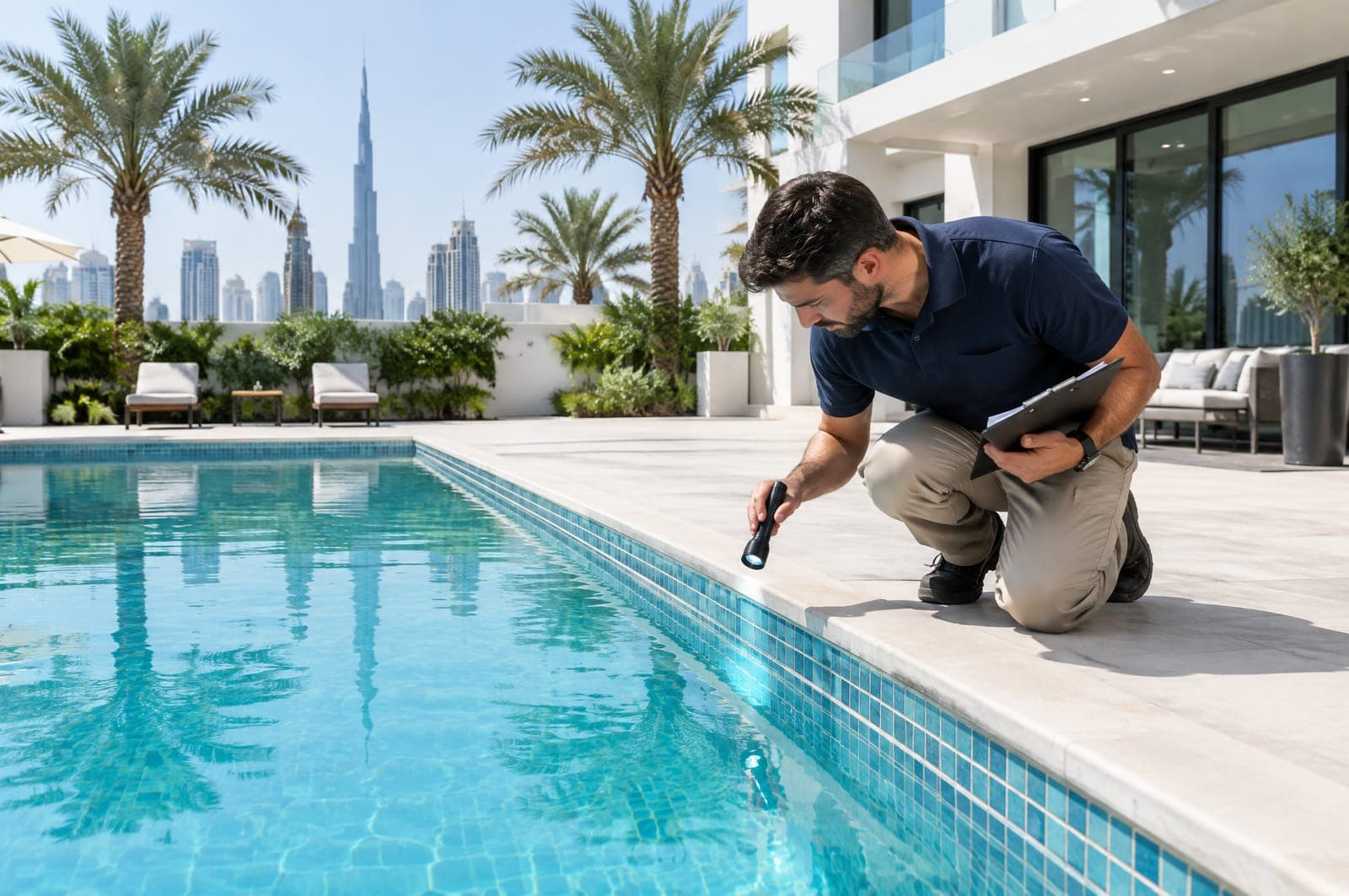
Checking the pool before you buy or rent a villa in the UAE
Look at the water, the shell, the enclosure and the plant room, and ask for the pool's registration, maintenance records and repair history. In Dubai the owner is responsible for keeping a private pool registered, safe and maintained, so gaps in the paperwork are worth taking seriously. If you see water loss, cracks, damp or tired equipment, book a professional inspection before you commit.
Last reviewed 24 Oct 2026
Problem
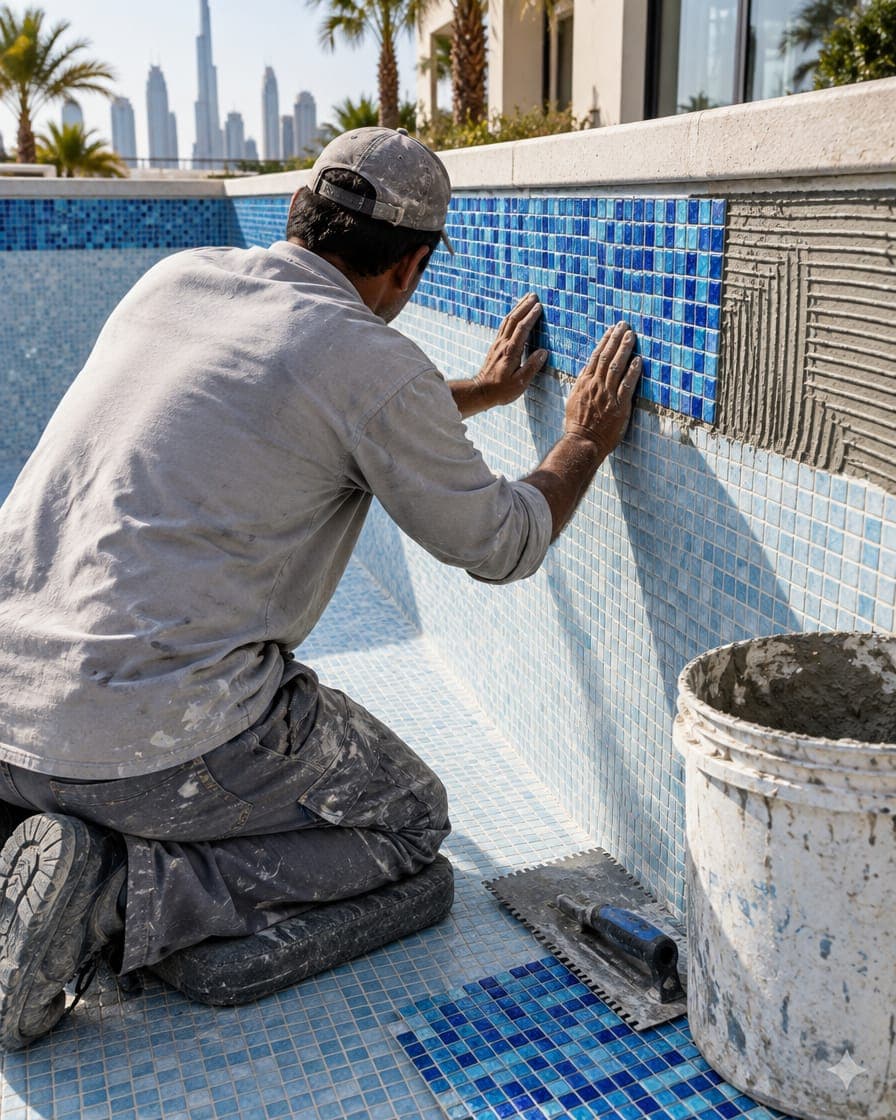
Cracked or loose pool tiles and mosaic: causes and repair options
Pool tiles usually crack or come loose because of movement at joints that were tiled over, voids behind the tiles from incomplete adhesive coverage, products not suited to permanent immersion, or water chemistry attacking grout and adhesive. Isolated tiles can often be re-fixed, but widespread hollow tiles or tile failure combined with water loss can point to a problem in the shell or waterproofing that a specialist should investigate first.
Last reviewed 24 Oct 2026
Problem
Fibreglass pool problems: osmosis blisters, gelcoat wear and cracks
Blisters on a fibreglass pool are usually osmotic: water passes through the gelcoat and reacts with the laminate behind it. Hairline or spider cracks often stay in the gelcoat, while bulging walls or cracks through the laminate point to structural stress. Isolated damage can usually be repaired locally, widespread osmosis may need the surface stripped and relaminated, and a fibreglass pool should only be drained under professional supervision.
Last reviewed 24 Oct 2026
Checklist
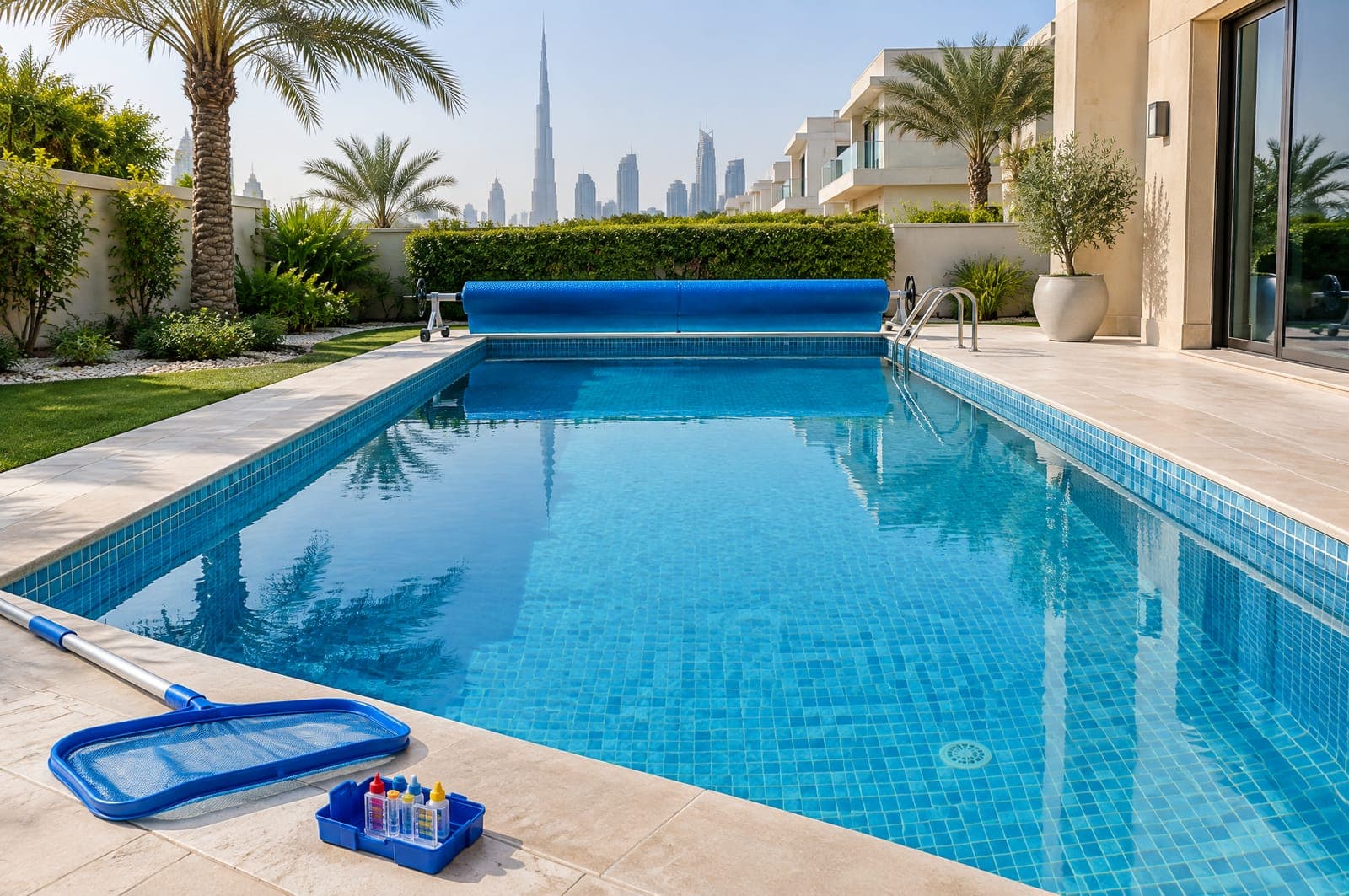
Getting a pool ready after a long summer away or before renting out a villa
Start with safety: the enclosure, gate, cover and rescue equipment. Then restore the water level, restart the pump only with water in the strainer, clean the filter, and test and balance the water before anyone swims. Before a handover, record the condition of the pool and equipment, leave the water-test log and manuals, and agree in writing who maintains the pool.
Last reviewed 24 Oct 2026
Problem
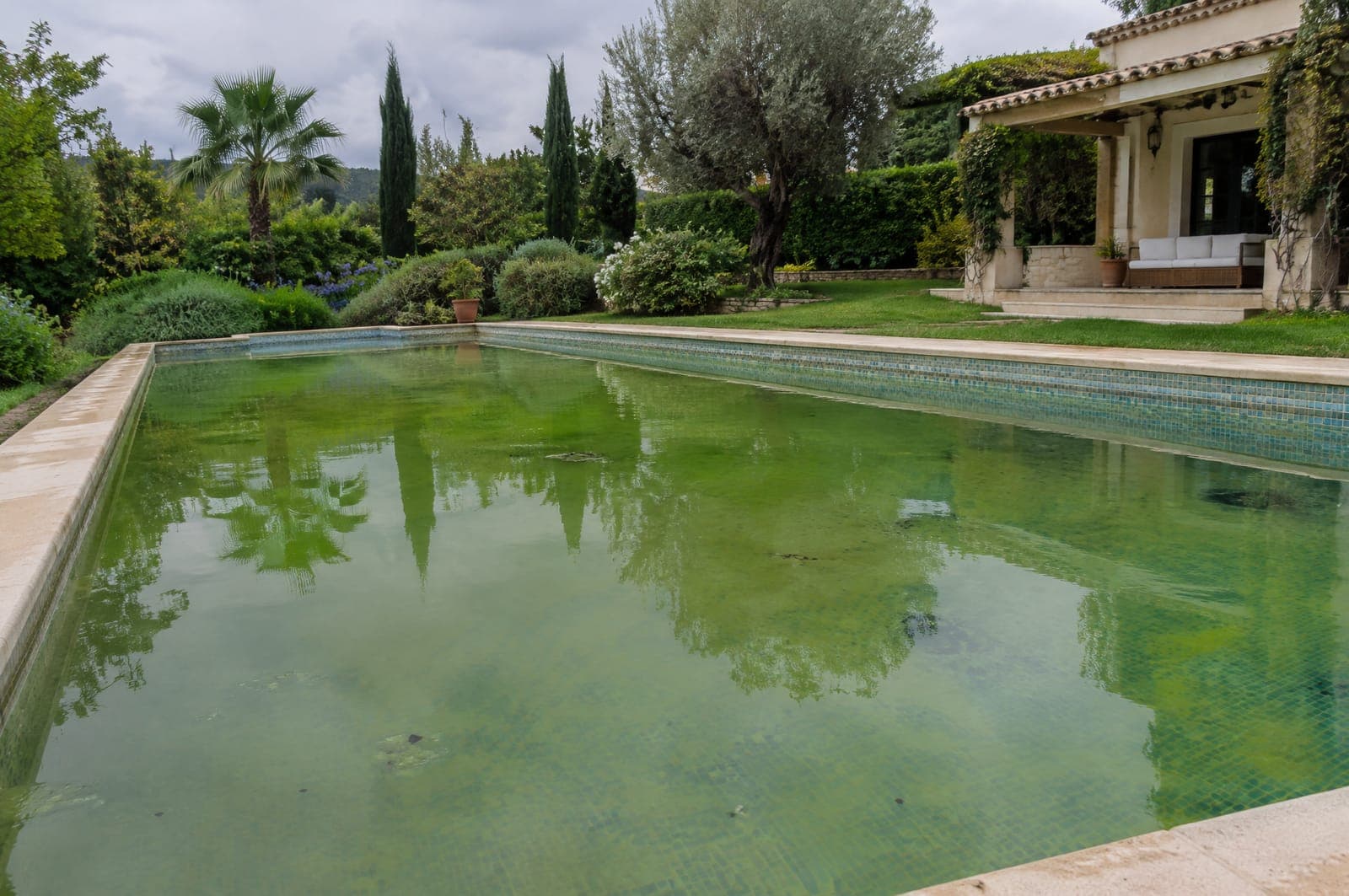
Green, cloudy or milky water: maintenance issue or equipment fault
Most green or cloudy water starts with chemistry: chlorine too low, pH too high or the water out of balance. If testing shows the chemistry is right and the water still will not clear, look at filtration and circulation, because a dirty or damaged filter, short run times or air in the system point to an equipment fault.
Last reviewed 24 Oct 2026
How it works
How professional pool leak detection works
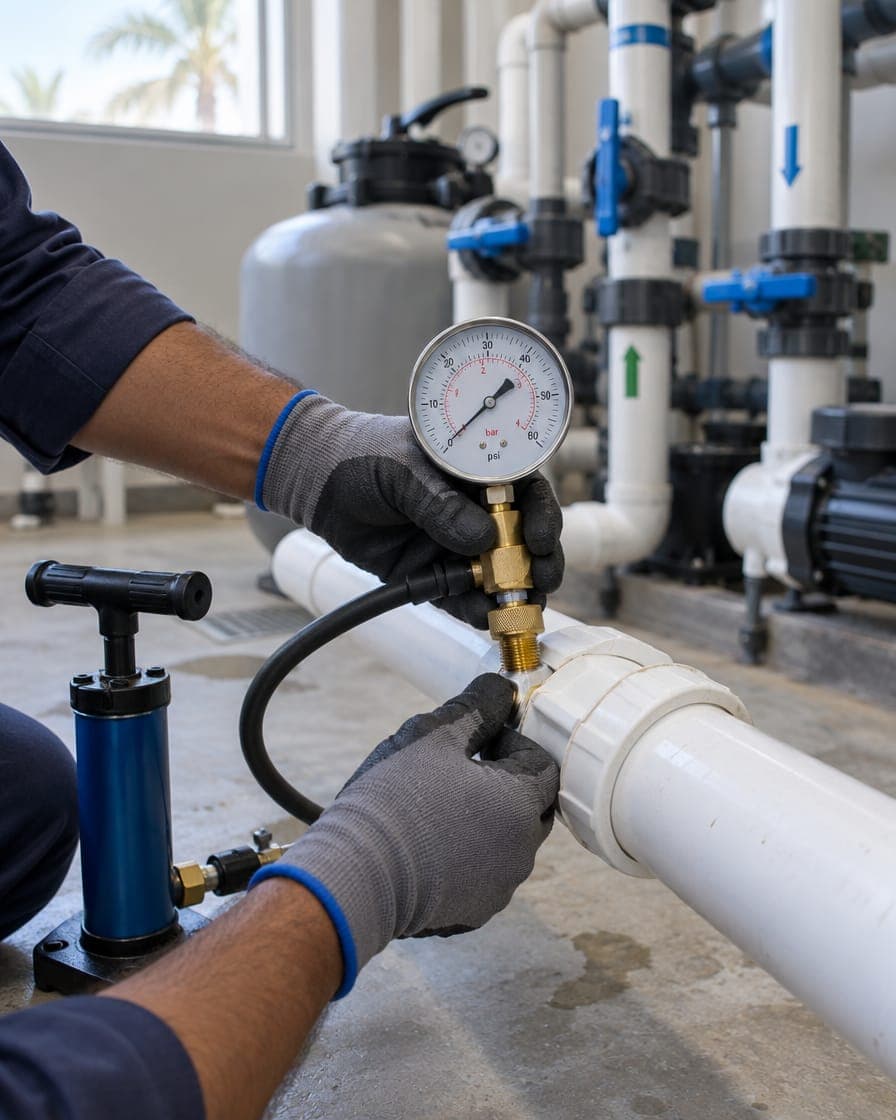
A leak detection specialist first confirms and measures the loss, then inspects the usual leak points, uses dye to confirm suspected spots, pressure tests each pipe line in isolation, and finally pinpoints buried leaks with listening equipment. The aim is to know exactly where the leak is before anyone breaks tiles or cuts the deck.
Last reviewed 24 Oct 2026