Guide
When does a full pool renovation make sense?
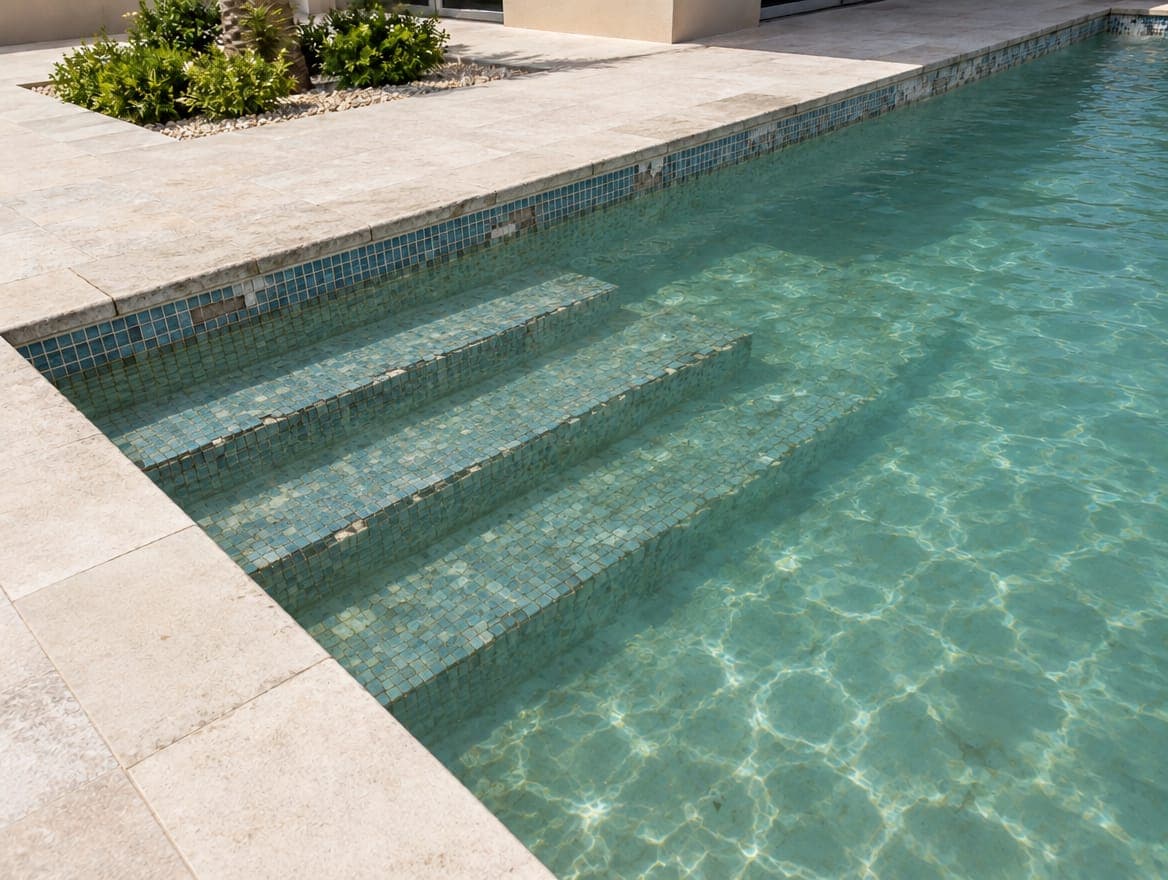
Should I repair my pool or do a full renovation?
Repair makes sense when a fault is local and its cause is known. A renovation makes sense when failures are widespread, when the same systems keep failing, or when the pool has to be emptied anyway and several systems (finish, waterproofing, pipework, equipment) are near the end of their life. A specialist inspection, and leak detection where water is being lost, should come before the decision.
Repair or renovation: the difference
A repair fixes a defined fault: a leaking fitting, a cracked pipe, a patch of loose tiles, a failed pump. A renovation renews one or more whole systems of the pool. In practice there are four:
- the interior finish (tiles, mosaic or plaster)
- the waterproofing behind it
- the pipework and fittings
- the equipment in the plant room
The decision is rarely all or nothing. Many good renovations are one or two systems done properly, timed so that the pool only has to be emptied once.
The four main renovation scopes
Resurfacing
Plaster and render finishes are wear surfaces, and on a concrete pool they are renewed during its life. Resurfacing usually means removing the old finish back to a sound base and applying a new one.
Re-tiling
When tiles are hollow, loose or cracking across large areas, re-fixing individual tiles stops working. The tiles are stripped, the base is checked and repaired, and the pool is re-tiled with a system rated for immersion. Missing movement joints are a common root cause and should be put right at this stage.
Waterproofing renewal
If leak detection rules out the pipework and the shell itself is losing water, the waterproofing needs attention. Options range from a new membrane behind new tiles to relining the pool. Stainless steel and PVC membrane systems are also offered for the renovation of ageing concrete pools; Natare, for example, lists this among the uses of its stainless steel systems.
Equipment replacement
Pumps, filters, chillers, lighting and controls can be renewed without touching the shell. Where a pool's plans were approved in Dubai, the plan approval guideline sets equipment expectations such as filter numbers by pool type and two pumps per pool, so ask the specialist whether any change affects compliance.
Questions that help you decide
- Is the fault local or widespread? One cracked tile is a repair. A third of the pool sounding hollow is not.
- Has the cause been found? If the pool is losing water, commission leak detection before any renovation quote. Renovating over an undiagnosed leak risks spending heavily and keeping the problem.
- How often has this system been repaired already? Repeated repairs to the same tiles, pipe run or equipment suggest the underlying system is the problem.
- Will the pool have to be emptied anyway? Emptying, curing and refilling are a significant part of any job. If one major task needs an empty pool, it usually makes sense to have the other systems assessed at the same time.
- Do you want to change anything? New steps, lighting, a different depth, a diving board or a slide are alterations. Dubai Municipality's guidelines state that pools must not be altered or modified, for example by adding a diving board or slides, without its approval.
- Is the pool shared? For a building or compound pool, the management entity will need to approve the work, plan the closure and protect residents during it.
Emptying a pool is a decision in its own right
Ask the specialist how they will assess the risks of draining before they do it, including groundwater conditions around an in-ground shell. Manufacturers of waterproofing systems take groundwater seriously: Construction Chemicals tells installers not to apply its membrane to in-ground concrete pools subject to hydrostatic back pressure from outside the shell.
Ask, too, where the water will go. Disposal of pool water is not a free choice: Dubai plan approval submissions, for example, must show how backwash water is disposed of. Your specialist should know the arrangement that applies to your property.
During works on a shared pool, Dubai Municipality's public pool guideline asks operators to prevent unauthorised access, especially by children, with barricades or fenced, locked work areas, and to fit a safety net or cover over an empty pool.
Curing and refilling
New finishes and adhesives must cure before the pool is refilled, and the timings come from the product system. They vary between manufacturers. UltraTileFix, for example, advises leaving a tiled pool for at least three weeks before introducing water and filling no faster than 750 mm in depth per day, while Construction Chemicals gives a minimum of seven days at 23°C and 50 percent relative humidity before filling, longer in cooler conditions. A proposal that does not mention curing time is incomplete.
Getting proposals you can compare
Ask every specialist to quote against the same written description of the pool and the problem, and to state:
- what they inspected or tested before quoting
- each system they propose to renew, and the products or system they will use
- how they will drain, protect, cure and refill the pool
- who obtains any approvals from the authority or building management
- what is excluded
- warranty terms for workmanship and for equipment
Comparing price alone between a full renovation and a patch repair tells you very little. Comparing scopes tells you a lot.
How this connects
Questions people ask
Should I get leak detection before a renovation quote?
Yes, if the pool is losing more water than evaporation explains. Knowing whether the loss comes from pipework, fittings or the shell decides what the renovation must include.
Do I need approval to renovate my pool in Dubai?
Dubai Municipality's guidelines require its approval before a pool is altered or modified, for example by adding a diving board or slides. Like-for-like repairs are not specifically addressed in the guidelines we reviewed, so check with Dubai Municipality and, for shared pools or communities, with the management entity.
Can equipment be replaced without emptying the pool?
Usually yes. Pumps, filters, chillers and controls sit in the plant room, so equipment upgrades can often be done as a separate job from work on the shell or finish.
Sources
- Stainless Steel Pool Construction Systems, Natare. Accessed 24 Oct 2026.
- Technical Guidelines for Approval of Swimming Pool Plans (DM-HSD-GU34-ASPP2), version 4.0, Dubai Municipality, Health and Safety Department. Accessed 24 Oct 2026.
- Public Swimming Pools Safety Guidelines (DM-HSD-GU81-PSPS2), version 3.0, Dubai Municipality, Health and Safety Department. Accessed 24 Oct 2026.
- Tiling swimming pools and permanently wet areas, UltraTileFix, Instarmac. Accessed 24 Oct 2026.
- Waterproofing and Tiling Swimming Pools, Construction Chemicals. Accessed 24 Oct 2026.
Next review due 24 Apr 2027
This guide explains general principles. It is not engineering advice and cannot tell you what is wrong with a specific pool. Rules change: check with the authority named in the sources before relying on them.