Waterproofing
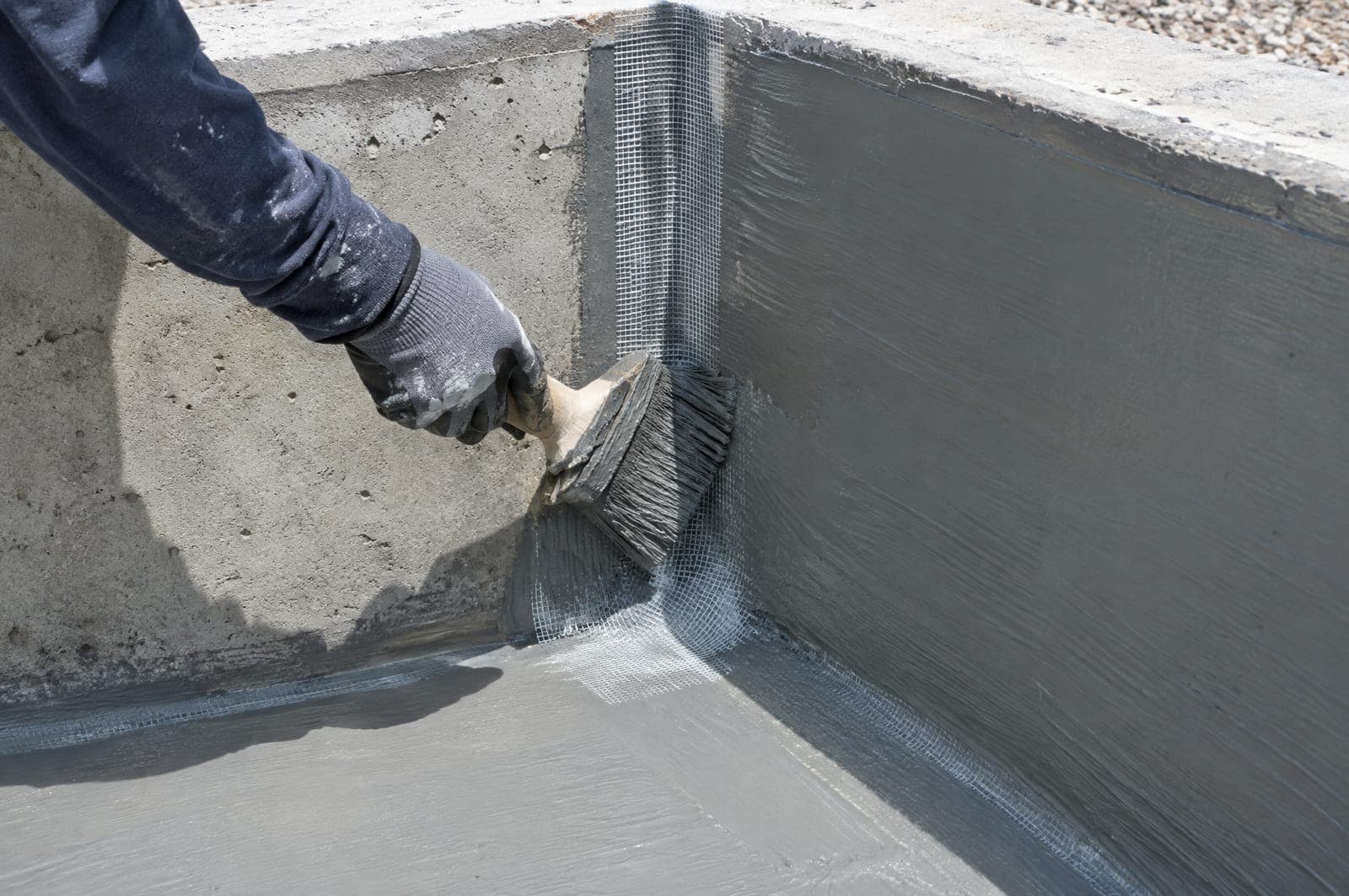
Waterproofing renews the membrane behind a pool's tiles or finish so the concrete shell holds water. It is usually done when a pool is stripped for renovation, or after leak detection has shown that water escapes through the shell.
When you need it
- Leak detection has ruled out pipes and fittings and points to the shell.
- Widespread hollow tiles, damp walls next to or below the pool, or staining on a ceiling below a rooftop pool.
- A renovation where old tiles are coming off anyway.
- Cracks or construction joints in the shell that have been opened and repaired.
Mapei makes a point worth knowing before you decide: no grout, cementitious or epoxy, replaces a continuous waterproofing layer. Cementitious grout is porous, and even impermeable epoxy grout cannot guarantee a leak-proof lining under the stresses a pool sees in normal use.
How a specialist does it
Based on guidance from Mapei and Construction Chemicals, the typical steps are:
- Strip the old lining completely. Mapei says existing tiles, PVC or other lining must be removed in full before waterproofing, so the substrate can be checked.
- Assess and repair the concrete. Cracks are opened, cleaned and filled. Where reinforcement is exposed, deteriorated concrete is removed, the bars are cleaned of rust and protected, and the section rebuilt with repair mortar.
- Seal the weak points. Mapei lists second pours, structural joints, pipework, circulation fittings and light fittings as preferential paths for water. Joints are bridged with bonded tape and penetrations sealed with water-expanding products.
- Apply the membrane. Flexible cementitious membranes are common. Construction Chemicals' system, as one example, specifies two coats to a stated dry film thickness over a primed, sound and clean surface.
- Cure. Every product has minimum times before tiling and before filling. Construction Chemicals, for example, asks for new concrete to be cured for 28 days or more before its system goes on, and at least 7 days at stated conditions before the pool is filled, longer in cooler weather.
- Test and finish. Many specialists fill test the shell before tiles go on. Tiling then follows with adhesive and grout compatible with the membrane.
There is an important limit to some systems. Construction Chemicals warns against using its system on inground concrete pools subject to negative or hydrostatic back pressure, meaning groundwater pushing from behind the shell. A specialist should explain where the water pressure comes from at your site and whether the chosen product is rated for it.
What to ask before you hire
- What evidence shows the shell is leaking rather than a pipe or fitting?
- Which membrane system will you use, and is it rated for permanent immersion and for any groundwater pressure from behind?
- How will you detail joints, skimmers, returns, lights and other penetrations?
- What cure times will you follow before tiling and before filling?
- Will you fill test the shell before tiling, and can I see the result?
- Are membrane, tiling and warranty from one contractor, or several?
UAE notes
Rooftop and podium pools sit above occupied space, so a failed membrane damages other people's property. Building management will usually want method statements and product data before work starts. Check with them early.
Some coastal and low-lying areas have a high water table. That is the back pressure case manufacturers warn about, so ask how the proposed system handles it.
Heat shortens working time for many cementitious and resin products. Ask how the contractor manages application and curing in summer, and whether work will be scheduled for cooler hours.
Questions people ask
Isn't epoxy grout enough to stop leaks?
Mapei says no grout replaces a complete, continuous waterproofing layer. Epoxy grout is non-absorbent, but the lining as a whole still moves and stresses under normal use.
Can a membrane go over the old tiles?
Mapei's renovation guidance calls for the existing lining to be removed completely first, so the concrete can be inspected and repaired.
How long will the pool be out of use?
It depends on repairs and on the cure times of the products used. Ask the contractor for a written programme that includes curing before tiling and before filling.
Sources
- Waterproofing Baths and Swimming Pools (technical documentation), Mapei. Accessed 25 Oct 2026.
- Waterproofing and Tiling Swimming Pools, Construction Chemicals. Accessed 25 Oct 2026.
General information, not engineering advice. Only an inspection tells you what is wrong with a specific pool.
Specialists for waterproofing
All 27Al Naseem Pools
Business Bay, Dubai
Unclaimed listing- Waterproofing (stated by public sources, unconfirmed)
Infinite Leisure Pools
Abu Hail, Dubai
Unclaimed listing- Waterproofing (stated by public sources, unconfirmed)
Al Qamar Pools
Ras Al Khaimah
Unclaimed listing- Waterproofing (stated by public sources, unconfirmed)
Alfenon Aljameela Swimming Pool Installation L.L.C.
Al Garhoud, Dubai
Unclaimed listing- Waterproofing (stated by public sources, unconfirmed)
Altaif Pool Cleaning
Al Murar, Dubai
Unclaimed listing- Waterproofing (stated by public sources, unconfirmed)
Backyard Landscape LLC
Al Quoz, Dubai
Unclaimed listing- Waterproofing (stated by public sources, unconfirmed)
Burj Al Wasl
Dubai
Unclaimed listing- Waterproofing (stated by public sources, unconfirmed)
Castle Innovative Swimming Pools L.L.C.
Deira, Dubai
Unclaimed listing- Waterproofing (stated by public sources, unconfirmed)
Dream Pool Dubai
Business Bay, Dubai
Unclaimed listing- Waterproofing (stated by public sources, unconfirmed)
Falak Almurjan
Al Quoz, Dubai
Unclaimed listing- Waterproofing (stated by public sources, unconfirmed)