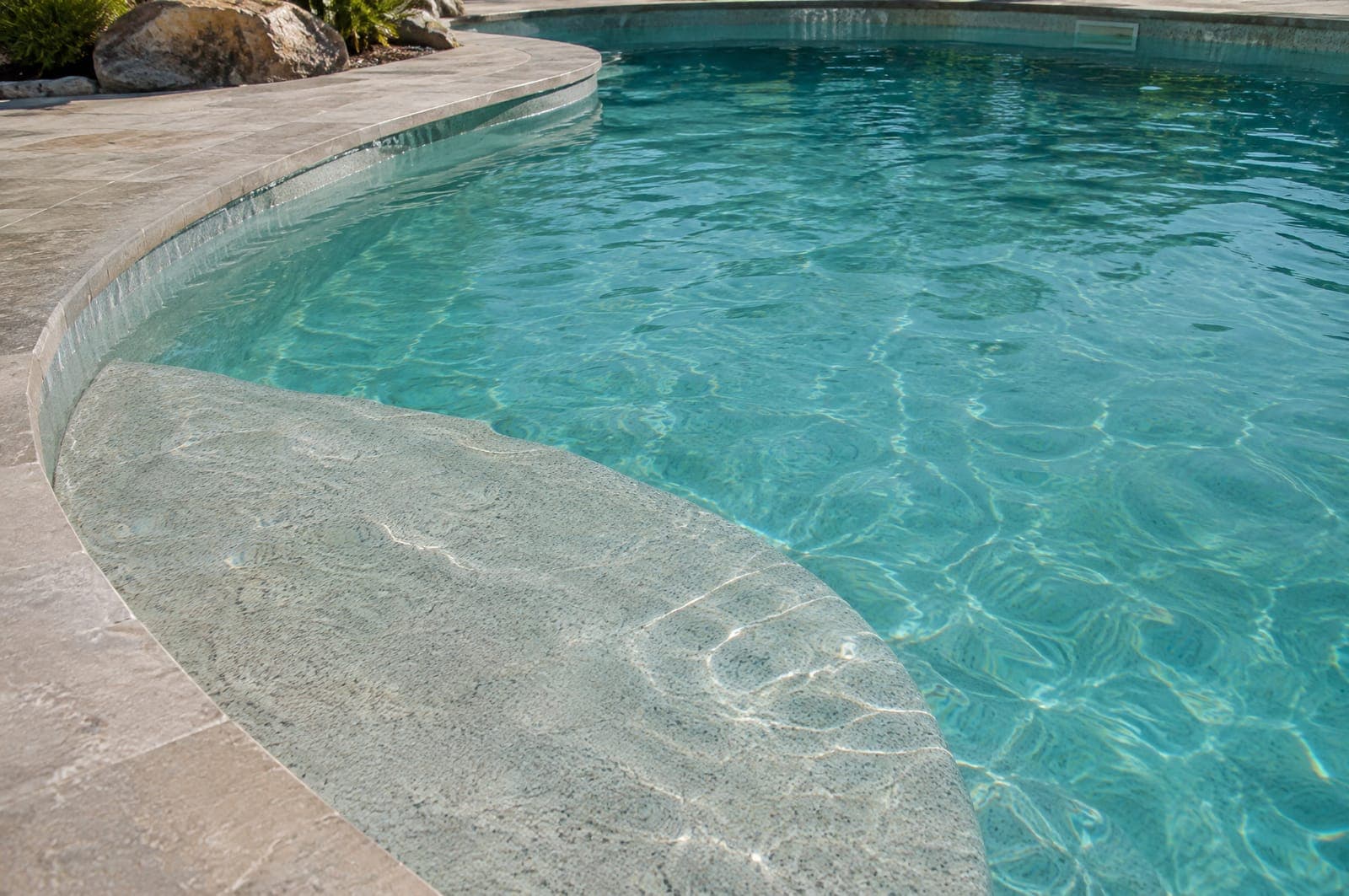
Concrete with plaster finish
A concrete shell can be finished with plaster, a pebble aggregate or a coloured render instead of tiles. These cement-based finishes give a continuous surface and a natural look. They need steady water chemistry to keep their colour and texture.
How it is built
The structure is a reinforced concrete shell, as with a tiled pool. The difference is the interior finish: a cement-based coat applied by trowel, sometimes containing pebbles, quartz or glass beads.
In the United States this kind of finish is covered by ANSI/PHTA/NPC/ICC-12 2025, the American National Standard for the plastering of swimming pools and spas, published by the Pool & Hot Tub Alliance, the International Code Council and the National Plasterers Council. According to PHTA, the standard covers the materials, application and finishing methods for non-structural cementitious interior finishes in public and residential pools.
Pebble Technology, a maker of aggregate finishes, states that all aggregate finishes consist of pebbles and cement. It notes that colour and shade vary naturally, that the finish looks different with the angle of the sun, and that owners should allow about 28 days before judging the final colour.
Typical problems with age
- Etching and roughness, where the surface becomes grainy.
- Scale and white deposits.
- Staining from metals, minerals or leaves.
- Loose pebbles or small areas where the finish has lifted.
- Cracks, which may be in the finish only or in the shell beneath.
- Fading and blotchy colour.
Pebble Technology warns that chlorine at high concentrations can cause metals or minerals to precipitate, clouding the water and causing scale or stains. It also advises that salt left on the surface may scale, stain or discolour the finish.
What repairs usually involve
Small cracks and chips can often be patched with matching material, although an exact colour match is difficult. Stains and scale may respond to treatments chosen by a specialist after testing. When the surface is worn across the whole pool, the usual answer is resurfacing: lowering or emptying the pool, preparing or removing the old surface and applying a new finish.
A new finish needs a careful start-up. Pebble Technology's care instructions say not to heat the water for at least 14 days, not to add salt for at least 28 days if a salt chlorinator is used, not to fill with soft water, and to test the water at least once a week. Your specialist should give you the start-up programme for the product they use.
UAE notes
Hot weather affects both fresh finish work and water chemistry. Ask your contractor how they protect a new finish from sun and heat, how the start-up period will be managed and who tests the water during it. Keep the written test results, since Pebble Technology advises owners to keep printed test reports in case of a warranty request.
What to tell a specialist about your pool
- Finish type: plain plaster, quartz, pebble or render, and the colour if known.
- When the pool was last resurfaced, and by whom.
- The problems you see, with photos taken in daylight.
- Your sanitiser type, for example salt chlorination.
- Recent water test results, if you have them.
- Whether the pool is losing water, which can point to a problem beyond the finish.
Questions people ask
Is plaster the same as a pebble finish?
Both are cement-based. Pebble and quartz finishes add aggregate to the mix, which changes the texture and the appearance.
Why does my finish look patchy?
Colour varies naturally in cement-based finishes, and staining, scale or etching can add to it. A specialist can tell whether it is cosmetic or a sign of surface wear.
Can a plaster pool be tiled later?
Often, if the shell is sound, but it is a renovation rather than a repair. A specialist will need to check the shell and decide how to prepare the surface.
Sources
- Pool & Hot Tub Alliance, International Code Council, and National Plasterers Council Publish ANSI/PHTA/NPC/ICC-12 2025 American National Standard for the Plastering of Swimming Pools and Spas, Pool & Hot Tub Alliance (PHTA). Accessed 25 Oct 2026.
- Pool Care Instructions, Pebble Technology International. Accessed 25 Oct 2026.
General information, not engineering advice. Only an inspection tells you what is wrong with a specific pool.
Specialists who work on this pool type
Desert Leisure
Nadd Al Hamar, Dubai
Unclaimed listingLeak detection, Full renovation, Routine maintenance, New pool construction, Equipment and supplies
Burj Al Wasl
Dubai
Unclaimed listingLeak detection, Tile and mosaic repair, Waterproofing, Resurfacing, Pump repair